What it is, why it matters, what has actually been built, and the biosafety threshold scientists are now approaching.
Reflexion Bio · A Concise Primer
All known life on Earth is built from molecules of a single handedness. No mirror form of biology is known to exist in nature, yet one is already chemically plausible and increasingly approaching technological feasibility. What follows examines what has been built, what remains unsolved, and why the next threshold matters most.
01 What is mirror life / mirror DNA
In terrestrial biology, core biomolecules have a consistent handedness, or chirality. Natural DNA and RNA use D-sugars, while proteins are built primarily from L-amino acids. "Mirror life" refers to hypothetical organisms built from the opposite chiral forms, such as L-sugar nucleic acids and D-amino-acid proteins.
"Mirror DNA" usually refers to nucleic acids built from the mirror-image sugars, such as L-DNA rather than natural D-DNA. These molecules can store the same sequence information but are generally not processed by ordinary biological enzymes in the usual way. A key technical milestone was the creation of a high-fidelity mirror-image Pfu DNA polymerase that can copy L-DNA[7].
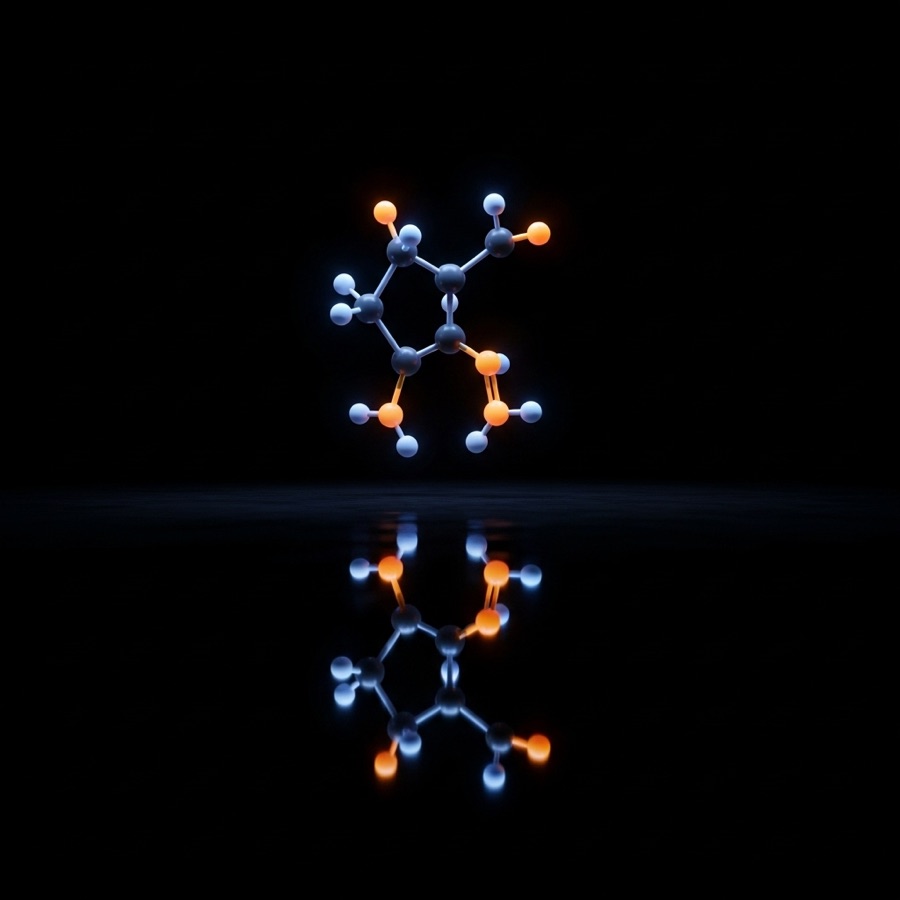
A molecule and its mirror image — the same information, opposite handedness
02 The core threat
The main concern is not mirror molecules by themselves. It is the prospect of building a self-replicating mirror organism.
A broad group of researchers argued in Science that mirror bacteria and related organisms could pose an extraordinary biosafety and biosecurity risk because they may sit outside many of the control systems that shape ordinary microbial ecology[3][4].
The main risk logic is:
Immune evasion: natural immune systems are tuned to natural biomolecular chirality, so recognition and clearance of mirror pathogens could be impaired.
Lack of natural predators or parasites: natural bacteriophages and many microbial antagonists are unlikely to work efficiently against mirror microbes.
Intrinsic resistance to ordinary biological controls: standard enzymes and many therapeutic mechanisms depend on natural stereochemistry.
Containment failure would be hard to reverse: once a self-replicating mirror organism exists, evolution and environmental adaptation become possible.
Yet the distinction matters. The UK government's 2025 note explicitly separates work on mirror components from work on mirror organisms or cells capable of self-replication, emphasizing that these are not the same category of risk[2].
03 What has actually been achieved so far
A full mirror cell or mirror bacterium has not been built.
But what has been achieved are important component-level advances:
3.1 Mirror-image PCR and DNA copying
Researchers chemically synthesized mirror-image polymerases and showed mirror-image PCR on L-DNA templates[9][8]. Later work extended this into a high-fidelity mirror-image Pfu DNA polymerase capable of accurate information storage and copying in L-DNA[7].
3.2 Mirror transcription and reverse transcription
Researchers demonstrated mirror-image gene transcription and reverse transcription, establishing parts of a chirally inverted central dogma[10]. A further milestone was the chemical synthesis of a mirror-image T7 RNA polymerase, enabling transcription of long mirror RNAs including mirror ribosomal RNA components[11].
3.3 Directed evolution of L-DNA aptamers
A 2022 Nature Biotechnology paper showed direct selection of biostable L-DNA aptamers using a mirror-image DNA polymerase[12]. This is important because it moves the field from one-off synthesis toward more scalable discovery workflows.
3.4 Mirror proteins and ligand discovery
Progress has also accelerated in synthesizing mirror-image protein targets and using them for binder discovery. A 2024 Nature Communications paper described a more general mirror-image phage display pipeline for discovering D-peptide binders[16]. Related 2024 work reported mirror-image monobodies and other mirror-protein binders with favorable biophysical properties[17][18].
3.5 Mirror ligase and translation-adjacent steps
Researchers have also reported a functional mirror-image DNA ligase, another key component for any future replication system[19]. And there has been progress toward simplified translation systems relevant to eventual mirror translation, including mirror-image tRNA charging concepts[20].
Despite the technical progress, the hardest steps are still missing:
A robust self-replicating mirror genome system
A practical mirror ribosome / translation apparatus
Integrated mirror metabolism
Cell envelope, transport, and homeostasis compatible with mirror biochemistry
Safe containment and control strategies for any system approaching replication competence
So the field is no longer science fiction. The path to a complete mirror organism is not yet fully fleshed out — but accelerating advances in synthetic biology and AI-assisted protein design are pointing unmistakably in that direction. The question is no longer whether the gap can be closed, but when, by whom, and under what governance.
05 Practical bottom line
Mirror biology already has real scientific and therapeutic value at the molecule and tool level. Mirror aptamers, mirror binders, and mirror nucleic-acid systems can be useful precisely because they are stable and orthogonal to normal biology.
The risk threshold changes sharply once work moves from components to self-replicating systems. That is why the most serious recent commentary focuses on preventing or pausing the deliberate creation of mirror bacteria or mirror cells until governance, containment, and ecological risk are much better understood.
Reflexion Bio
Where we come in
Reflexion Bio is working at this exact frontier. Our goal is to turn the science into practical capability — the tools, technologies, assays, and therapeutics that can bring the benefits of mirror biology to patients and researchers.
We will guide policymakers in defining the boundaries that matter: the distinction between component-level work that can advance medicine vs. replication-level work that should not proceed without serious governance. We treat that distinction as non-negotiable.
And if that line is ever crossed — deliberately or accidentally, by anyone — the capacity to detect, contain, and respond must already be in place. National security must be prepared for every eventuality. Reflexion is building that readiness now.